The studio
Named for the bend
a slow river carves
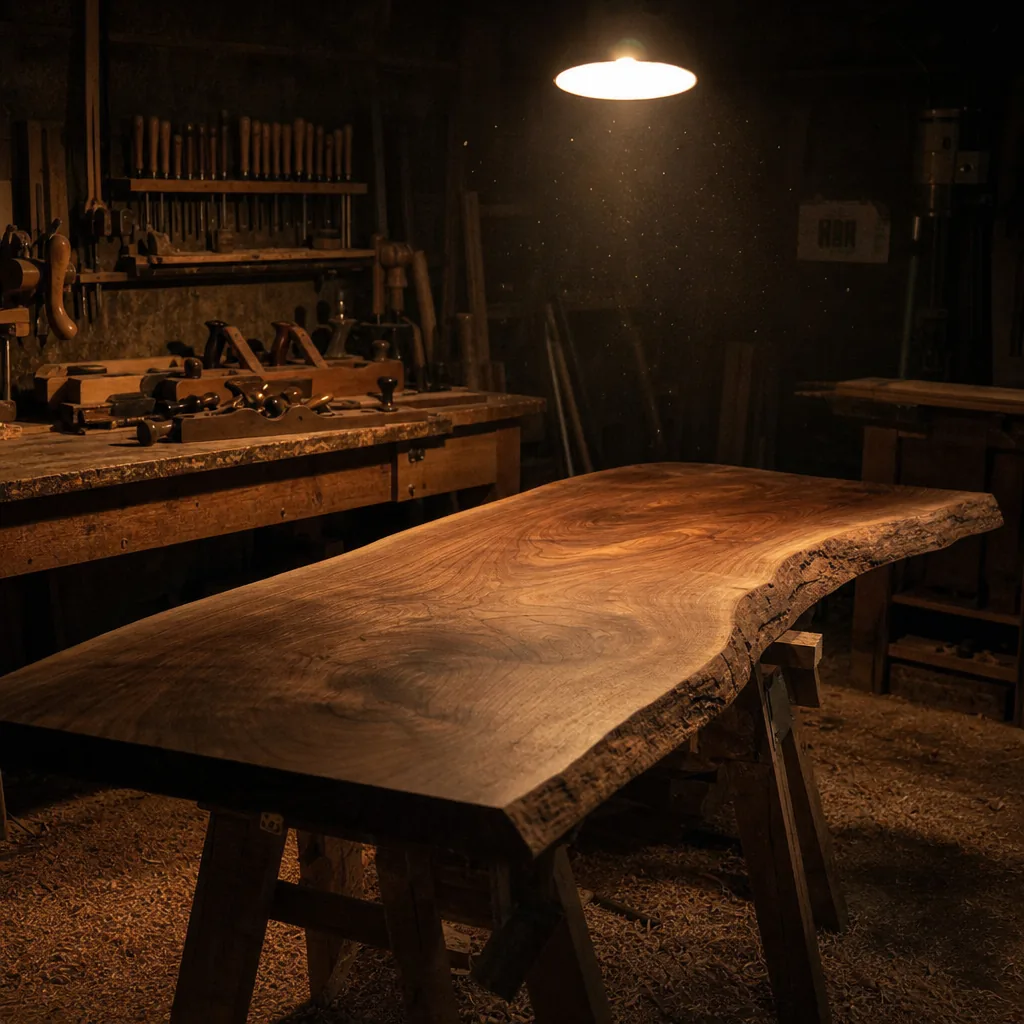
An oxbow is the U-shaped meander a river cuts when it stops hurrying. We borrowed the name because it is how we work: the resin river in every piece follows the slab’s own live edge. We do not straighten it.
Founded 2016, still eight forms
The studio began with one river table built for a Skagit Valley farmhouse kitchen and a waiting list we never advertised. Ten years on we keep the catalog at eight standing forms — enough to hold a range, few enough that every slab still crosses the same two benches and the same four hands.
We build eleven to fourteen pieces a year. That number is set by cure times, not by demand — a deep pour cures in thirds over three weeks, and we will not stack the schedule against it.
Salvage sourcing
Trees that fell, not trees that were felled
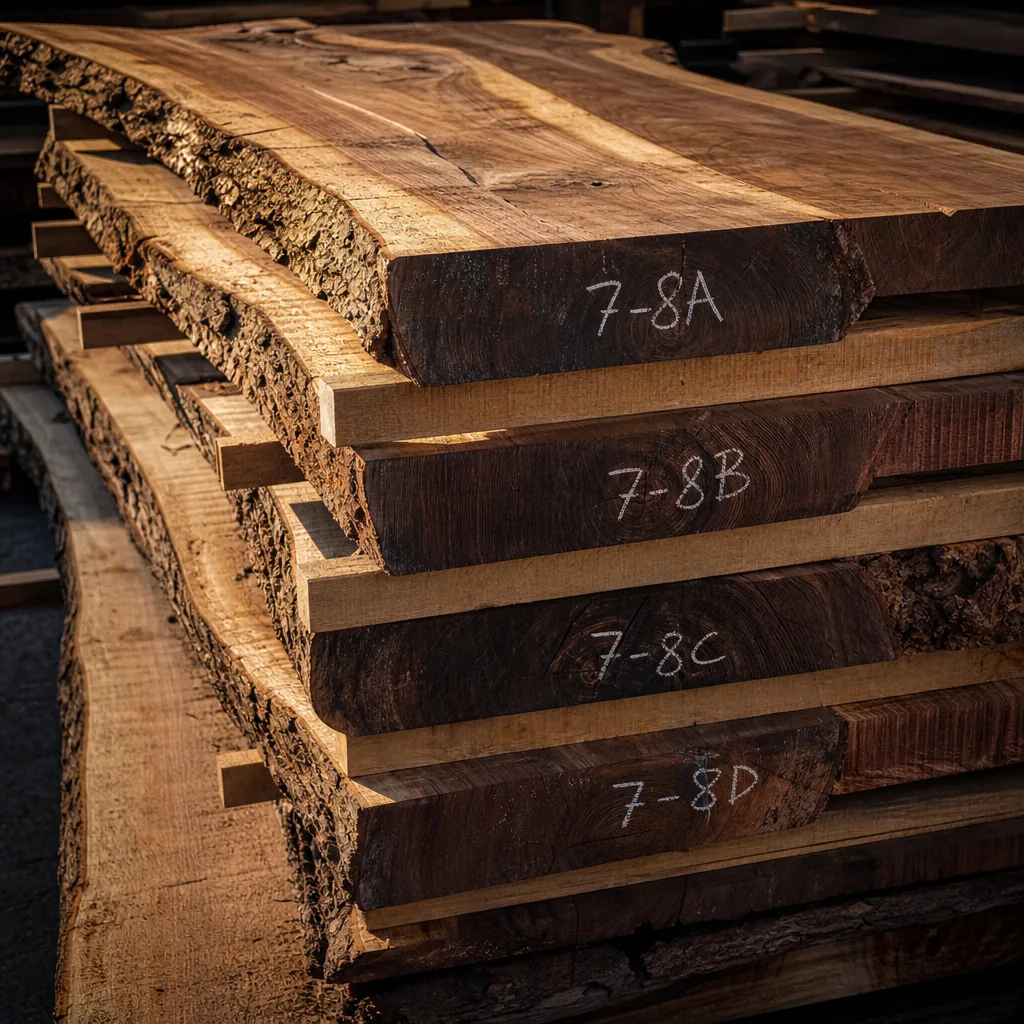
Every slab comes from three small mills we have worked with for a decade — windthrow, orchard retirements, and storm salvage, milled where the tree came down.
Newaukum Hardwoods
Chehalis, WA
claro walnut
McKenzie Bend Sawyers
Vida, OR
Oregon white oak
Wickersham Salvage Mill
Deming, WA
big-leaf maple
A year per inch
Slabs air-dry in the yard one year for every inch of thickness, stickered and weighted, then finish in the kiln to eight percent moisture. The drying yard is the studio’s real inventory — three years of tables you cannot buy yet.
Each slab is lotted the day it arrives: species, mill, board feet, and the date it can first be flattened. The lot code follows the piece onto its spec sheet and into its care card.
The four tints
Mixed in the studio, named for the water
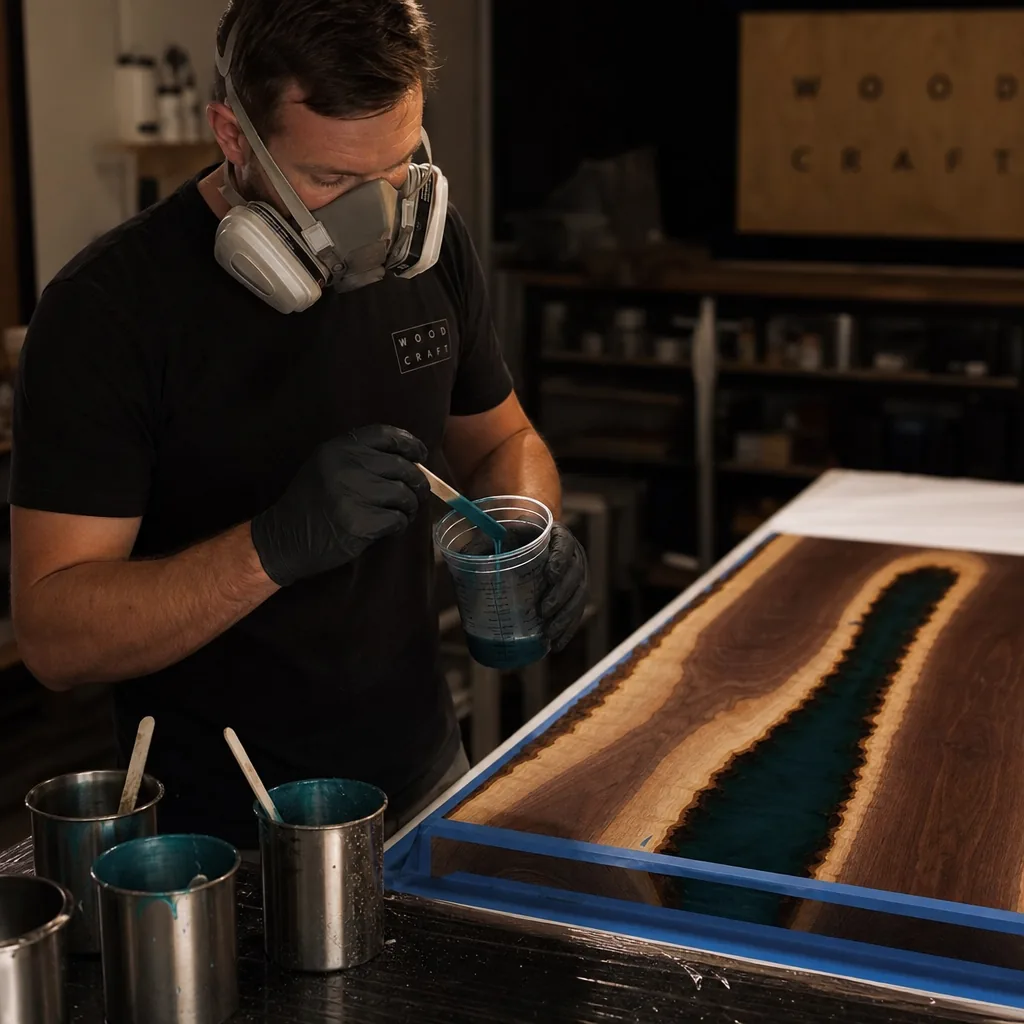
We tint resin by hand, per pour, from four standing recipes. Each product line keeps its own tint; Clear belongs to whichever slab earns it.
Glacier Teal
Cold-water green, poured deep. Reads near-black in low light, glacial in sun.
Tannin Amber
The color of oak-steeped creek water. Warm against burl figure.
Deepwater
Navy at depth. Holds its own against blackened steel.
Clear
No pigment at all. For slabs whose voids do the talking.
Slab to table, six steps
- Slab Salvaged logs from three small mills. We buy trees that fell, not trees that were felled.
- Dry Air-dried one year per inch of thickness, then kiln-finished to 8% moisture. Dated, lotted, stickered.
- Flatten Router-sled flattening to within 0.5 mm across the span. The slab decides its final thickness.
- Pour Hand-tinted resin, poured in lifts of 12 mm. Deep rivers cure in thirds over three weeks.
- Cure Full cure at 72°F before any tool touches the surface again. This is the step we will not compress.
- Finish Sanded to 2000 grit over the resin, hardwax oil over everything. Matte. The grain does the shining.